
"Half Century"
3000 article(s) found

Introduction of Gene Mutants of Fine Coffee beans
From left to right: Kenya round beans, elephant beans, Kenya AA pointed bourbon (Bourbon Pointu): found in Bourbon Island in 1810, beans changed from round to pointed, with only half the caffeine content, but in small quantities, weak and extremely precious (mostly cultivated in the laboratory). Elephant bean (Maragogype, or Elephant Bean): the most famous variety of Tibica beans, first found in northeastern Brazil in 1870.

The basic flavor characteristics of Panamanian Rosa coffee
The basic flavor characteristics of Panamanian rose coffee in 1931 it was exported to Kenya in obscurity from Geisha Mountain Mountain in southwestern Ethiopia (which happens to be synonymous with Japanese geisha), wandered to Tanzania and Costa Rica, and was transplanted to Panama in the 1960s. It took nearly half a century before it became a blockbuster, defeating the victorious armies Bourbon, Kaddura,

Coffee books recommend: "I can't imagine life without coffee."
Inconceivable Life without Coffee Starbucks cannot imagine Life without Coffee Page 51 when it comes to the United States, you have to mention this brand that has attracted worldwide attention, Starbucks (Starbucks), the leader of the coffee industry. As the saying goes, "if I'm not at Starbucks, I'm on my way to Starbucks." The reason people put the original sentence "I'm not at home, I'm in the coffee shop; I'm not in the coffee."

Coffee common sense coffee aroma in Paris, France in the 17th century
I've been going to many cafes in recent years, and I'm getting bored. I often daydream about the old cafes, the old beauties that can only be read in books but cannot be experienced in person. For example, when it comes to cafes in Paris today, people's first impression is the relaxed and enjoyable atmosphere of relaxed seats in the shade of trees or in the Arbor. But in the past, Parisians drank coffee, which was not like this at all. Straight

Visit the hometown of espresso
Zhong Tianyang first tasted espresso in an interview in Geneva. When I first got off the plane, it was bright and sunny, but the interview was half an hour later, and everything was on the run. When I finally appeared in the interview room with a tired face, away from
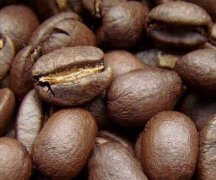
The history of coffee roaster basic knowledge of coffee
As early as the 13th century, the Arabs invented to put coffee beans in a pot, stir-fry them with fire, grind them into powder, and then brew coffee. The early Arabs liked to bake the beans shallowly and boil them with spices such as cardamom. Later, this coffee stir-frying method spread to Syria, Turkey and Egypt, where it was used to stir-fry the coffee black, then grind it into powder and add it.

Brazilian Queen Manor Yellow Bourbon Brazilian Queen Manor Yellow Bourbon
Professional coffee knowledge exchange More coffee bean information Please pay attention to coffee workshop (Weixin Official Accounts cafe_style) Front Street-Brazil Queen Manor Yellow Bourbon Brazil Queen Manor [Country] Brazil Production area: So Paulo State near So Sebastio da Grama [Manor name] Queen Manor (Fazenda Rainha)[Garden owner] Regina Helena Mello d

Columbia holy farm-cloud manor boutique coffee pointed bourbon introduction
Professional coffee knowledge exchange more coffee bean information please follow the coffee workshop (Wechat official account cafe_style) sharp bourbon caffeine content of about 0.4% between 0.75% is half that of other Arabica caffeine (other Arabica caffeine is usually 1.2% 1.6%) the land occupied by holy farms is the private property of the Pichinde Holking family in Cauca Valley.

The Coffee Culture in China
The history of the introduction of coffee into China is not long, and it was not until 1884 that coffee was first planted in Taiwan Province. In the mainland of the motherland, the earliest coffee cultivation began in Yunnan. At the beginning of the 20th century, French missionaries brought the first batch of coffee saplings to Binchuan County, Yunnan Province, and began to grow coffee in the mainland. In terms of natural conditions, many parts of our country and

Very soft Brazilian South Minas fine coffee beans origin development history and culture brief introduction
Coffee was first introduced to Brazil in the early 18th century. In 1727, the Brazilian government sent a handsome army officer to secretly bring coffee seeds back to Brazil from French Guiana on the grounds of mediating border disputes. It is said that the wife of the governor of French Guiana at that time was deeply fascinated by this officer, so she secretly sent coffee seeds to him in a bouquet at a farewell dinner.

The Royal Fuji roaster is a semi-hot air. Introduction to the coffee maker recommended by the small direct brand.
About Fuji royal roaster: the fusion of traditional and latest technology. Trusted brand FUJIROYAL (Fuji Royal) roaster. Excellent and simple operation has been well received! I can be trusted because I know a lot about coffee beans. With half a century's achievements, it has become a small series of fixed models of 1kg, 3kg, 5kg and 10kg. After continuous improvement, even beginners can be simple.
Coffee Bean Type Introduction Gene Mutant
From left to right: Kenyan round beans, elephant beans, Kenyan AA pointy Bourbon (Bourbon Pointu): Found on Bourbon Island in 1810, the bean body has changed from round to pointy, and the caffeine content is only half; however, the quantity is small and weak, and it is extremely precious (mostly cultivated in the laboratory). Maragogype (or Elephant Bean): The best-known variety of tibeka bean, first developed in northeastern Brazil in 1870.

Introduction of flavor description and taste treatment of rose coffee beans in Panamanian jadeite manor
Flavor description of Rose Summer Coffee beans in Panamanian Emerald Manor taste treatment method introduction: in 1931, Rose Summer Mountain (Geisha Mountain) in southwestern Ethiopia (which happens to be synonymous with Japanese geisha) was exported to Kenya in obscurity, wandering around Tanzania and Costa Rica, and then transplanted to Panama in the 1960s, and then survived for nearly half a century before it became a blockbuster and defeated the victorious army wave.

Coffee cultivation and development in Cuba
Coffee farming in Cuba began in the mid-18th century, with the first coffee farm established by Don Jos Gelabert in Wajay, outside Havana, in 1748. A large number of French and submarine immigrants followed after the outbreak of the Haitian Revolution in 1789.

Introduction to the producing areas of varieties and manors by the method of describing the flavor of Tarazhu coffee beans in Costa Rica
Costa Rican Tarazu Coffee Bean Flavor description method Variety Manor production area introduces Laminita Farm in Tarazhu producing area, its strict management has established a world-class reputation and is popular in European and American markets for more than half of the century. it can be called a world-famous coffee farm. Lamini Tower means a small gold mine. Before the Spanish colonization, the Indians used to dig gold at the present farm location.

Panamanian Arida Estate Coffee Bean Flavor Description Grind Scale Treatment Variety Introduction
Emerald Manor became famous for its Geisha variety. Rose seeds were discovered in 1931 in Ethiopia's rose forests and sent to coffee research institutes in Kenya; they were later introduced to Uganda, Tanzania and Costa Rica, all with mediocre results. It was not until the 1960s that it was transplanted to Panama and survived nearly half a century before it became a blockbuster. 2005, 2006 and 2007

Fine coffee Learn Yunnan traditional coffee processing techniques
Yufa, which opened in the 1960s and has a history of more than 50 years, is like stepping into a time tunnel. The machines displayed and used in the store have been used for more than half a century, and the old appliances have recovered their old flavor. Fang found that old appliances are not purely nostalgia, but the accumulation of traditional wisdom of the older generation. Homemade coffee originated from a Hainan master and has been handed down to this day. It is also the main coffee supplier boss of the old villagers in the town.

Coffee roaster development history Capsule coffee machine introduction
Coffee beans were fried in iron pans in the early days. After coffee was introduced into Europe, Europeans used Turkish iron pans to fry beans on the one hand, and later invented hand-rotating roasting, which could bake several pounds of beans at the same time, which was used by some coffee shops. In the 1860s, large roasters began to appear, and in 1867 the use of blowers to cool beans after roasting gave birth to

What does the blue mark, green mark, red mark of Rosa Coffee mean?
What does the blue mark, green mark and red mark of Rose Summer Coffee mean? in 1931, Rose Summer Coffee was exported to Kenya in obscurity from Geisha Mountain Mountain in southwestern Ethiopia (which happens to be synonymous with Japanese geisha), traveled to Tanzania and Costa Rica, was transplanted to Panama in the 1960s, and then survived nearly half a century before it became a blockbuster, defeating the victorious armies Bourbon, Kaddura and Kadu.

Introduction to the characteristic treatment method of Puerto Rico coffee bean flavor description grinding scale
Apart from the sunshine and beaches of the Caribbean and Miss World, do you know what else is most attractive about this South American island known as the port of wealth? That's the best coffee. Puerto Rico is one of the world's preeminent coffee producers. Since the second half of the 19th century, Puerto Rican coffee has become the first choice of the Vatican and European royals, and has also been the president of the United States.